
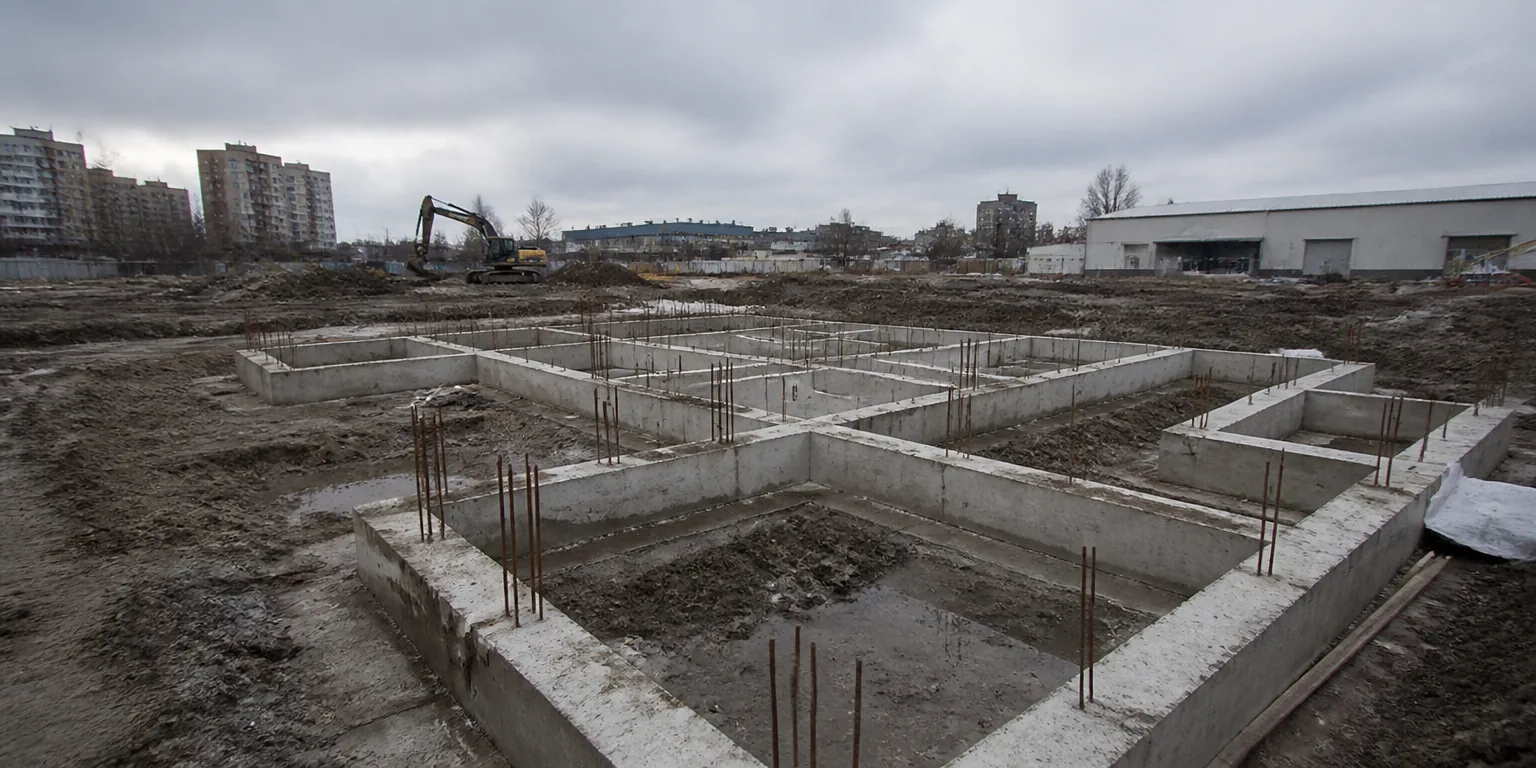
Site constraints
Site logistics constraints
The building was straightforward. Getting materials to it, storing them and working within the permitted hours was not, and none of that appeared in the cost plan.
The situation
A percentage carried forward from a different kind of site
A prime residential scheme sat on a restricted urban plot with a single point of access, no on site storage and a highway licence limiting deliveries to defined windows. Neighbouring occupiers were sensitive, and the planning consent carried working hour conditions with real teeth.
The cost plan carried preliminaries at a percentage derived from previous schemes. That percentage had been produced on sites with laydown areas, unrestricted deliveries and standard working hours. It bore no relationship to what this site would demand.
Contractors pricing the job understood the constraints perfectly well. They priced them, and the client, having no independent view of what those constraints were worth, had no basis on which to test the figures received.
What we found
Cost concentrated where a percentage cannot reach
Logistics cost sat in a small number of items, each of which behaves like a measured quantity rather than like a proportion of the works.
Delivery windows forced just in time supply across most packages, which raised labour cost through waiting time and removed any buffer against supplier failure.
Craneage was on the critical path for several packages simultaneously, so the crane became a programme constraint rather than a plant item.
Absence of storage required off site consolidation, an entire cost line that had no place in the cost plan at all.
Working hour restrictions extended the programme, and extended programme carries preliminaries every week regardless of what productive work occurs.
What changed
Build preliminaries from the site, not from precedent
The client did not eliminate the constraint cost. They established what it was, and stopped paying twice for it, once in the preliminaries and again in every package rate.
Price each constraint separately
Every restriction received a measured cost consequence, which gave the client a figure they could defend and a basis on which to interrogate the returns.
Treat logistics as a design question
Two packages were changed to off site manufacture, which reduced deliveries, reduced storage demand and shortened the on site programme.
Put the crane on the programme, not in the plant list
Where craneage sits on the critical path for several packages, it is a sequencing decision with a cost, and it was assessed as one.
Carry the programme extension as its own line
Working hour restrictions extend duration, and duration carries preliminaries. That was shown explicitly rather than absorbed into a percentage.
Why this happens
The largest item, and the least examined
Preliminaries are the biggest single line on many projects. A percentage carried forward from a previous scheme feels reasonable, and it is entirely disconnected from the conditions of the site being priced.
Cost planning and estimating builds the preliminaries position from site conditions and programme, not from precedent. Furthermore, tendering and procurement uses that position to structure packages around the constraint rather than against it.
Questions
Asked about constrained sites
Why do constrained sites cost more than the measured work suggests?
Because constraint is priced through time and access rather than through quantity. The same wall costs more when it can only be reached by a hoist, built in a restricted working day and served by a single delivery bay booked in advance. None of that appears in the measured item. It appears in preliminaries, in labour productivity and in programme duration, which are the three places a cost plan is least likely to have examined in detail.
How early can logistics be assessed?
As soon as there is a site boundary and an outline massing, which is well before the design is fixed. Access routes, crane positions, delivery capacity and neighbour constraints are largely a function of the site rather than the building, so they can be tested at feasibility. That timing matters, because logistics frequently influence the sensible construction methodology, and methodology influences the design. Assessing it after the design is settled means paying for a decision that was taken without the information.
Do contractors allow for logistics in their tender?
They allow for the logistics they assume, and their assumptions are visible in the preliminaries build-up if you ask for it. Where the tender documents do not describe the constraints, each bidder invents a different set, and the cheapest return is usually the one that invented the least demanding version. Setting out the constraints in the documents removes that variability and makes the returns comparable. It also removes the contractor's later argument that the position was not as described.
What are the most commonly underestimated constraints?
Delivery and storage, working hours imposed by a planning condition or a section 61 agreement, and the cost of maintaining access for an operational neighbour. Each is easy to describe and hard to price without thinking about programme. Party wall matters and highway licences also arrive late and carry both cost and duration. None of these are unusual; they are simply outside the frame of a cost plan built element by element.
Can logistics cost be reduced, or only accounted for?
It can often be reduced, and that is the more valuable exercise. Options include changing the construction sequence, increasing offsite fabrication to cut deliveries and site labour, revisiting the crane strategy, or negotiating an amended working hours condition. Each has a cost and a saving, and each needs pricing on the same basis before it is chosen. Doing that comparison early is far cheaper than absorbing the constraint through a longer programme.
Related scenarios
Where this connects
Constrained site priced from a standard percentage?
Send the site plan, the consent conditions and the programme. We will build the preliminaries position from what the site actually demands.
Insights