
Phasing
Phasing coordination failure
Each phase was planned properly. What nobody had planned was the condition in which one phase would hand the site to the next.
The situation
Every phase inherited a problem the last one was not asked to solve
A regeneration scheme was delivered in four phases, with residents in occupation from the completion of the first. Each phase had its own budget, its own contract and its own programme, and each had been prepared competently in isolation.
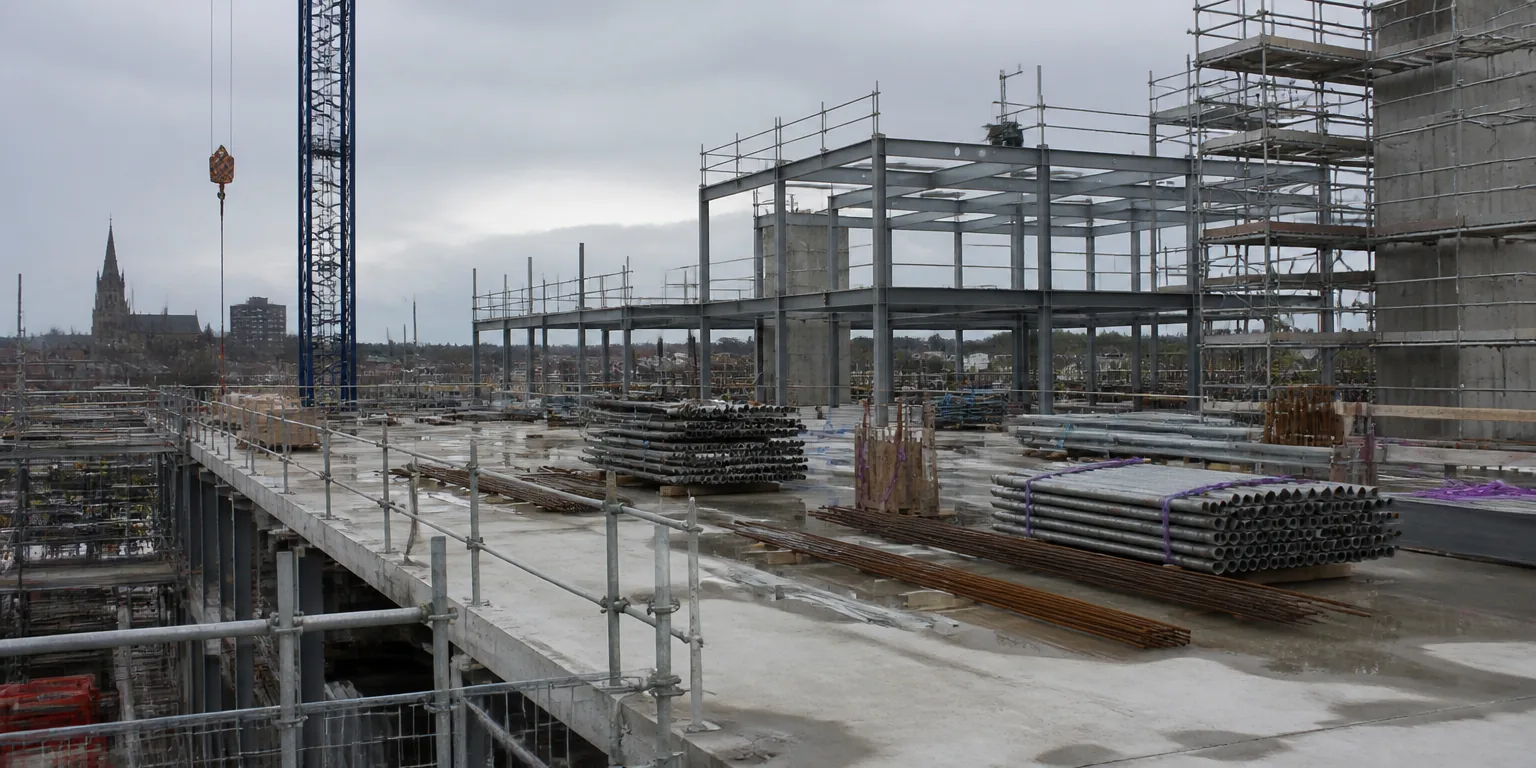
The joins had not been prepared at all. Temporary works supporting Phase One had to remain until Phase Two structure was complete, yet responsibility for them ended at Phase One practical completion. Site access for Phase Three ran through Phase Two, which by then was occupied. Utilities had been diverted for Phase One on the assumption they would be permanently rerouted in Phase Two, and that reroute had been value engineered out.
Consequently every phase inherited a problem the previous phase had not been asked to solve.
What we found
Phase level budgeting, scheme level blind spot
The exposure sat entirely in the transitions, which is precisely where no budget had responsibility.
Enabling and temporary works were priced within the phase that installed them, with no allowance in any budget for their retention, maintenance or eventual removal.
Handover conditions between phases were not defined, so each contractor left the site in the condition their own contract required and the next contractor priced remediation as an extra.
Occupied phases imposed constraints on subsequent phases that had never been priced, including noise limits, access restrictions and protection requirements.
Scheme wide preliminaries such as hoarding, security and site accommodation were duplicated across phase budgets in some periods and absent in others.
What changed
Treat the boundaries as priced events
The scheme total moved. The client's ability to see what they were committing to moved considerably further.
Rebuild the position at scheme level
Phase boundaries were treated as priced events rather than accounting divisions, so the transitions became visible alongside the phase budgets.
Define the handover condition in both contracts
Each transition acquired a stated condition, written into the outgoing and the incoming contract, so remediation stopped being an extra.
Fund temporary works across their real life
Enabling works were paid for over the period they actually stand, not within the phase that happened to install them.
Price occupation constraints into the phase that bears them
Noise limits, access restrictions and protection requirements were allowed for in advance, so no contractor priced them as unforeseen once already on site.
Why this happens
Risk does not respect the funding structure
Phased schemes are budgeted the way they are funded, which is phase by phase. Risk accumulates exactly at the boundaries where financial responsibility ends.
Cost planning and estimating holds the scheme level position alongside the phase budgets so the transitions are visible. In addition, tendering and procurement fixes handover obligations contractually rather than leaving them to be negotiated between two contractors who have no relationship.
Questions
Asked about phased delivery
Why does phasing cost more than a single continuous build?
Because every phase boundary is a cost boundary. Site set-up is repeated, temporary works are installed and removed, services are cut in stages, and the sequence rarely allows a trade to work continuously. A phased scheme also carries interfaces that a single build does not have, and each interface has to be designed, priced and inspected. The premium is real and it is manageable, provided it is identified at the point where the phasing is chosen rather than discovered as the phases are delivered.
How should a phased scheme be budgeted?
Phase by phase, with the shared costs allocated explicitly rather than spread evenly. Preliminaries, temporary works, statutory connections and enabling works rarely divide neatly, and allocating them by area or by value hides which phase is actually carrying them. Where a funder is drawing down against phases, that allocation becomes a reporting problem as well as a commercial one. Setting the basis out at the start avoids a difficult conversation at the second drawdown.
What is the most common phasing mistake?
Choosing the phasing from a sales or occupation programme without pricing the construction consequence. The commercial logic of releasing units early is usually sound, but the sequence it implies can force a construction methodology that costs considerably more than the alternative. Both need to be on the table together. Where the two are decided separately, the phasing is fixed before anyone has established what it costs to build that way.
Can phasing be changed once the contract is let?
Only at a price, and usually a poor one. The contractor has priced a sequence, planned resources and placed subcontract orders against it, so a change to the phasing is a change to nearly every assumption behind the tender. Where a change is genuinely necessary, the valuation is complex and needs to be established before the instruction is issued rather than agreed afterwards. That is one of the few places where the timing of the commercial advice matters more than its content.
How do handovers between phases create exposure?
Through incomplete work, shared services and access. A phase handed over while the next is still building means occupied space adjacent to a construction site, with all the noise, access and protection obligations that follow. Those obligations cost money and they constrain the remaining works. They also generate defects arguments, because it becomes difficult to establish whether damage arose from construction or from occupation. Defining the handover condition in the contract documents is what limits that.
Related scenarios
Where this connects
Phased scheme budgeted phase by phase?
Send the phase budgets and the programme. We will show you what sits in the transitions and what it is currently costing nobody.
Insights