
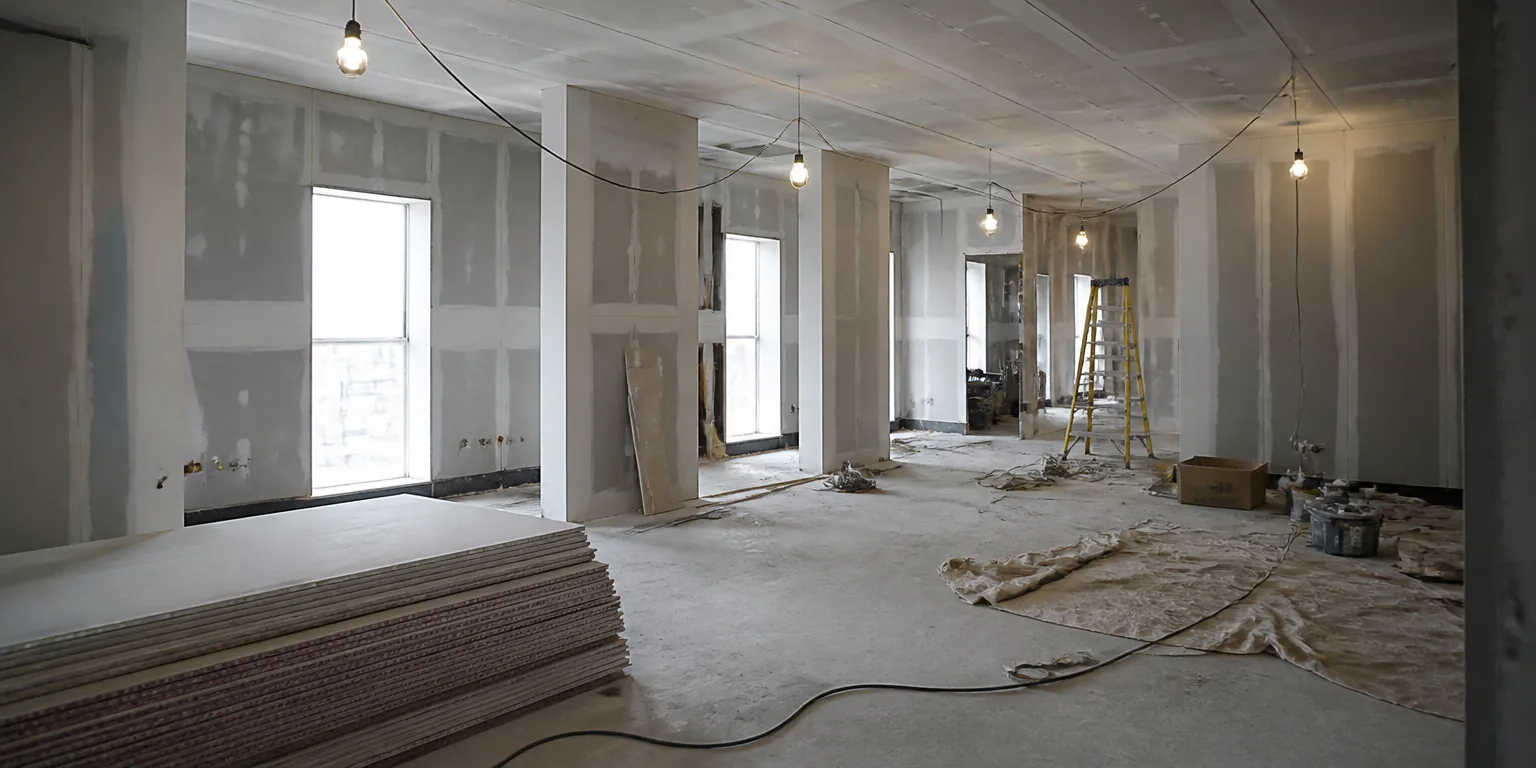
Design interface
Design coordination breakdown
Every discipline had completed its work correctly. The problem was in the space between them, which belonged to nobody.
The situation
Clashes were resolved. Nobody resolved who paid
On a mixed use scheme with substantial services distribution through a transfer structure, coordination was managed through a clash detection process that ran to completion and reported acceptable results.
Clashes had indeed been resolved geometrically. What had not been resolved was who paid for the resolution. Each time a service was rerouted, a builder's work opening moved, a fire stopping detail changed or a bulkhead grew, a commercial consequence followed. Nobody was recording those consequences, because the coordination process was owned by the design team and design teams do not price outcomes.
The cost appeared on site, package by package, described as unforeseen.
What we found
The commercial gap sat where the contractual gap sat
Four findings, all of them at the boundaries between packages rather than inside any one of them.
Coordination resolution routinely transferred work between packages without any corresponding transfer of value, so one subcontractor absorbed scope and later claimed it.
Builder's work in connection was priced by allowance against an early drawing set and never revisited, despite openings having moved repeatedly.
Fire stopping and acoustic detailing at the revised interfaces had no clear package owner. Each contractor assumed another held it.
Ceiling voids had tightened through coordination to the point where several access and maintenance requirements could no longer be met, which produced late change to the architectural design.
What changed
Read coordination commercially as well as technically
Each resolution was assessed for the transfer of scope it created, and where scope moved, value moved with it.
Treat every resolution as a commercial event
A clash resolved geometrically was also assessed for what it moved between packages, so a subcontractor absorbing scope was identified at the time rather than at claim.
Map interface responsibility into the subcontracts
Fire stopping and acoustic scope acquired an owner in the documentation before installation, rather than after inspection when the only remedy is a variation.
Re-measure builder's work against the coordinated model
That single exercise removed the largest category of unforeseen cost on the scheme, because the openings being built bore no relation to the ones originally allowed for.
Test the voids against maintenance requirements
Coordination that satisfies clash detection can still produce a building nobody can maintain. Checking that before construction avoided a late architectural change.
Why this happens
Clash detection asks the wrong question
Coordination is treated as a design deliverable with a technical test: does the model clash. The commercial test, which is whether scope has moved between parties, is not part of the process and is not anybody's responsibility unless it is made so.
Quantities and take-off applies that second test, reading coordination changes as commercial events. Moreover, cost control and variations ensures the resulting transfers are valued while the record is contemporaneous rather than reconstructed at final account through final accounts and disputes.
Questions
Asked about design interfaces
Whose responsibility is coordination between disciplines?
Contractually it depends on the appointments and the route, which is precisely why it is so often nobody's in practice. Architects coordinate their own information, engineers theirs, and the space between the models is assumed to belong to whoever holds the lead designer role. Establishing who carries it, in writing, before information is issued for construction, is worth more than any amount of clash detection run afterwards.
Does clash detection solve coordination problems?
It solves geometric clashes, which are the visible subset. What it does not catch is a specification mismatch between two elements that fit perfectly, an interface where both parties assumed the other was providing the fixing, or a service route that is clear in the model and unbuildable in sequence. Those are commercial coordination failures rather than spatial ones, and they need someone reading the packages against one another rather than running a report.
How does poor coordination reach the cost report?
Late, and disguised. It arrives as a series of small instructions, each individually defensible, which together represent work nobody priced. Because the instructions are issued over months and attributed to different packages, the pattern is not visible in any single report. Aggregating change by cause rather than by date is what makes it visible, and it usually shows that a handful of interfaces are generating most of the movement.
Can coordination failures be recovered from the design team?
Occasionally, and the analysis is worth doing where the sums are significant, but recovery is harder than most clients expect. Establishing a breach of a designer's obligation, and then establishing the loss net of the cost the client would have incurred had the work been coordinated correctly from the start, is a demanding exercise. The betterment argument alone removes a large part of most claims. Prevention remains substantially cheaper than recovery.
What is the earliest sign of a coordination problem?
Requests for information that ask who is providing something rather than how something is to be built. A rising rate of that kind of query, particularly around service interfaces and building envelope junctions, means the packages do not meet cleanly. Monitoring the content of those requests, not just the count, gives several weeks of warning before the same problem appears as an instruction with a price attached.
Related scenarios
Where this connects
Coordination complete and cost still arriving as unforeseen?
Send the coordinated model and the package documents. We will show you where scope has moved without value moving with it.
Insights