Reltic Construction Consultants Independent Commercial Advisory
Services
Project types
Who we work with
Projects Scenarios Insights Process About
Contact 020 3576 2851
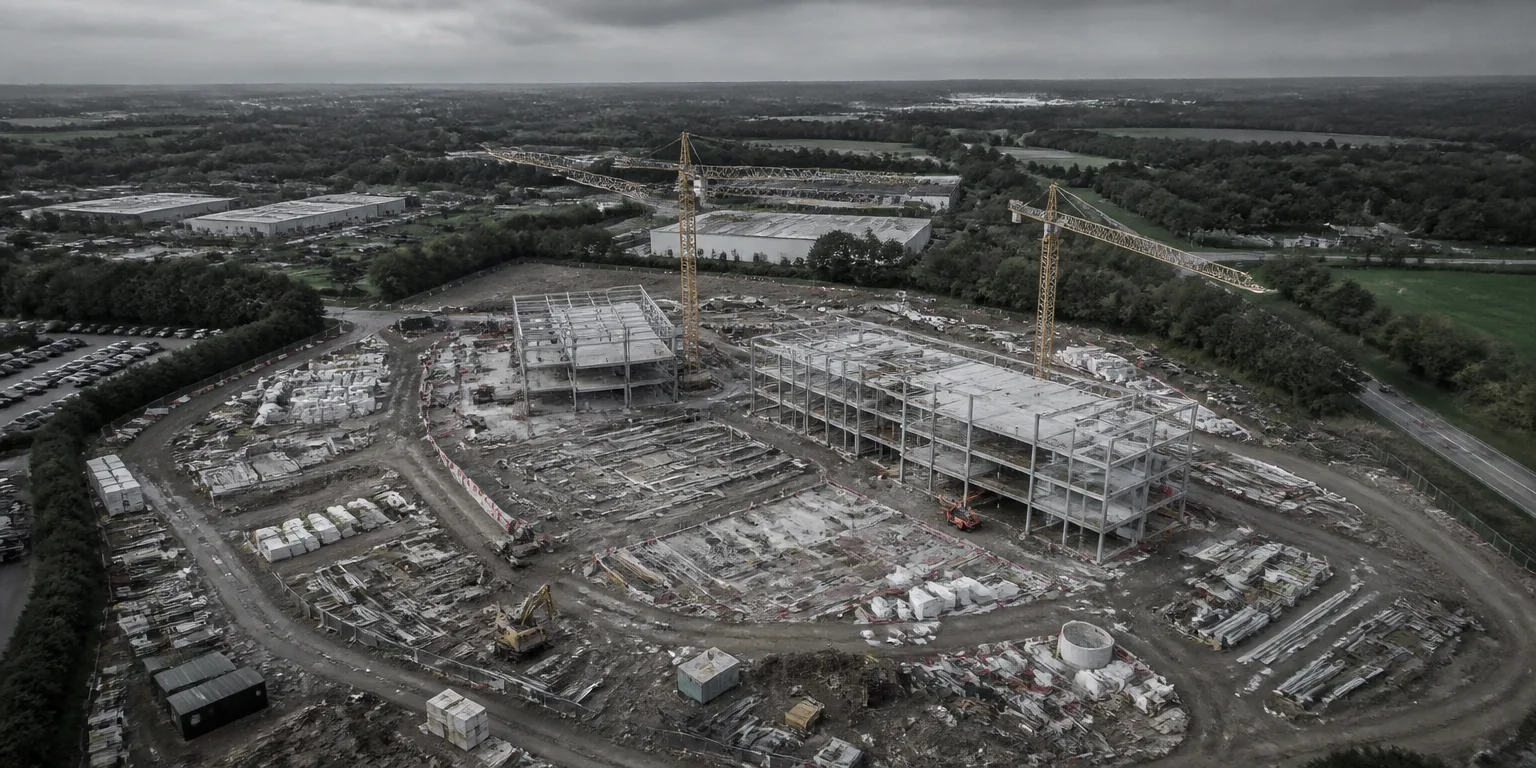
Aerial photograph of a large development site with foundations and steel frames under construction

Borrower side

Commercial advice for property developers

Almost everybody advising you on a development is paid by somebody with an interest in the answer. The agent wants the sale, the contractor wants the job, the design team wants the scheme built. We hold none of those interests and we act for one side of a project only.

The problem

The build cost is the least tested number in your appraisal.

Gross development value is checked against comparable sales more or less continuously, because that data is public. Build cost is usually a rate carried across from the last scheme, and it carries no date.

That asymmetry decides more than it looks. Residual land value sits at the bottom of the appraisal and absorbs the error in every line above it, so an eight per cent movement in build cost can take a third of what you can pay for a site. The same rate that loses you good sites in a rising market lets bad ones through in a falling one.

The second problem is timing. By the time there are drawings worth measuring, the structural solution, the specification and the procurement route are all chosen, and each of those moved more cost than the measurement ever will. A surveyor appointed to price a finished design is doing arithmetic on decisions taken months earlier.

None of this requires anybody to have behaved badly. It is what happens when the only party without a stake in the outcome is not in the room.

Who instructs us

Developers, at three different points.

The instruction usually arrives at one of these moments, and what we can do differs sharply between them.

Profile 01

Before the land is committed

A residual land valuation is only as good as the build cost inside it, and that figure decides what you can bid. This is the cheapest hour on the whole project and the one most often skipped, because the site may not proceed.

Profile 02

While the design is still open

Two structural solutions that both work will not both work commercially. An option comparison at this stage is worth more than a cost plan, because the answer can still change the drawing rather than only the budget.

Profile 03

Once a scheme is already running

A good share of instructions arrive after something has gone wrong. The first exercise is establishing where the position genuinely stands, which is rarely where the last report said. That reconciliation is uncomfortable and it is the only honest starting point.

What you get

Documents written to be handed over, not explained.

Output 01

A cost plan with its boundary stated

Exclusions and assumptions on the face of the document rather than in an appendix, each assumption with a value and a note on what would establish it. A total without them is not advice.

Output 02

Quantities to NRM1 and NRM2

Measured scope a contractor can price and cannot later reinterpret. Where the design is incomplete, the gaps are filled deliberately and recorded, not quietly.

Output 03

A monthly position you can act on

What moved, what is going to move, and what decision is now due. A report that states a certified figure and a variance describes the past accurately and helps with nothing.

Output 04

An account that settles

Changes reconciled against what was instructed and what was built, from a record kept during the job rather than reconstructed afterwards.

Services

What we are usually instructed to do.

Cost planning and estimating

The figure you take to a board or a lender, built from measured scope.

Client side quantity surveyor

Measurement and valuation across the life of the scheme, with an opinion attached.

Employer’s agent

Where the contract names us to instruct, value and certify on design and build.

Cost control and variations

The monthly cycle, with change valued before it becomes a claim.

Tendering and procurement

The documents and the route, which together decide how change gets priced later.

Final accounts and disputes

Closing the account on a record built during the works.

Questions

Before you instruct.

How early is too early to bring you in?

There is no such thing. The most useful point is before the land is committed, because the build cost inside your appraisal decides what you can bid. That work is a defined piece quoted as a fixed sum, so you know the cost before you commit to it.

We already have a quantity surveyor. What would you add?

Possibly nothing, and we will say so. Where a surveyor is measuring and valuing competently, a second opinion is worth having on the specific decisions that carry the most money rather than across the whole appointment. Where nobody is testing the position independently, that is a different conversation.

Do you work on schemes that are already in trouble?

Frequently. The first output is a reconciliation of where the position actually stands: what has been certified, what has been instructed but not valued, what has been claimed and what is still open. It is uncomfortable reading and it is the only place to start.

Will you act for our lender as well?

No. The lender’s monitoring surveyor reports on whether your position is sound, which is a duty that conflicts directly with acting for you. We take one side of a project only, and where both approach us about the same scheme we take the first instruction and decline the second.

What size of scheme do you take on?

The threshold is complexity rather than value. A straightforward scheme at several million pounds may need less attention than a phased refurbishment at a fraction of that. If the commercial position is simple, we will say so rather than propose a fee against it.

How do you charge?

Full lifecycle appointments are usually a percentage of construction value. Defined pieces of work are quoted as a fixed sum. Expert and dispute work runs at a day rate. The basis is agreed and written down before anything begins, with the exclusions stated rather than discovered.